


Which Customs Documents Do You Need for International Marketing Shipments?
Incorrect customs documentation is the main cause of delays in international shipments. Learn which documents you need and how to prevent costly mistakes.
According to logistics research, documentation errors are responsible for 80% of all customs delays. For marketing teams running time-critical campaigns, one missing document or incorrect code can mean the difference between a successful product launch and a campaign that starts two weeks late.
Customs is often the invisible obstacle in international marketing distribution. You've produced your materials perfectly, your timing is right, but then your shipment gets stuck at customs because the Certificate of Origin is missing, or because the HS code is incorrect. The solution? Understanding which documents are needed when, and working with a partner who masters this process.
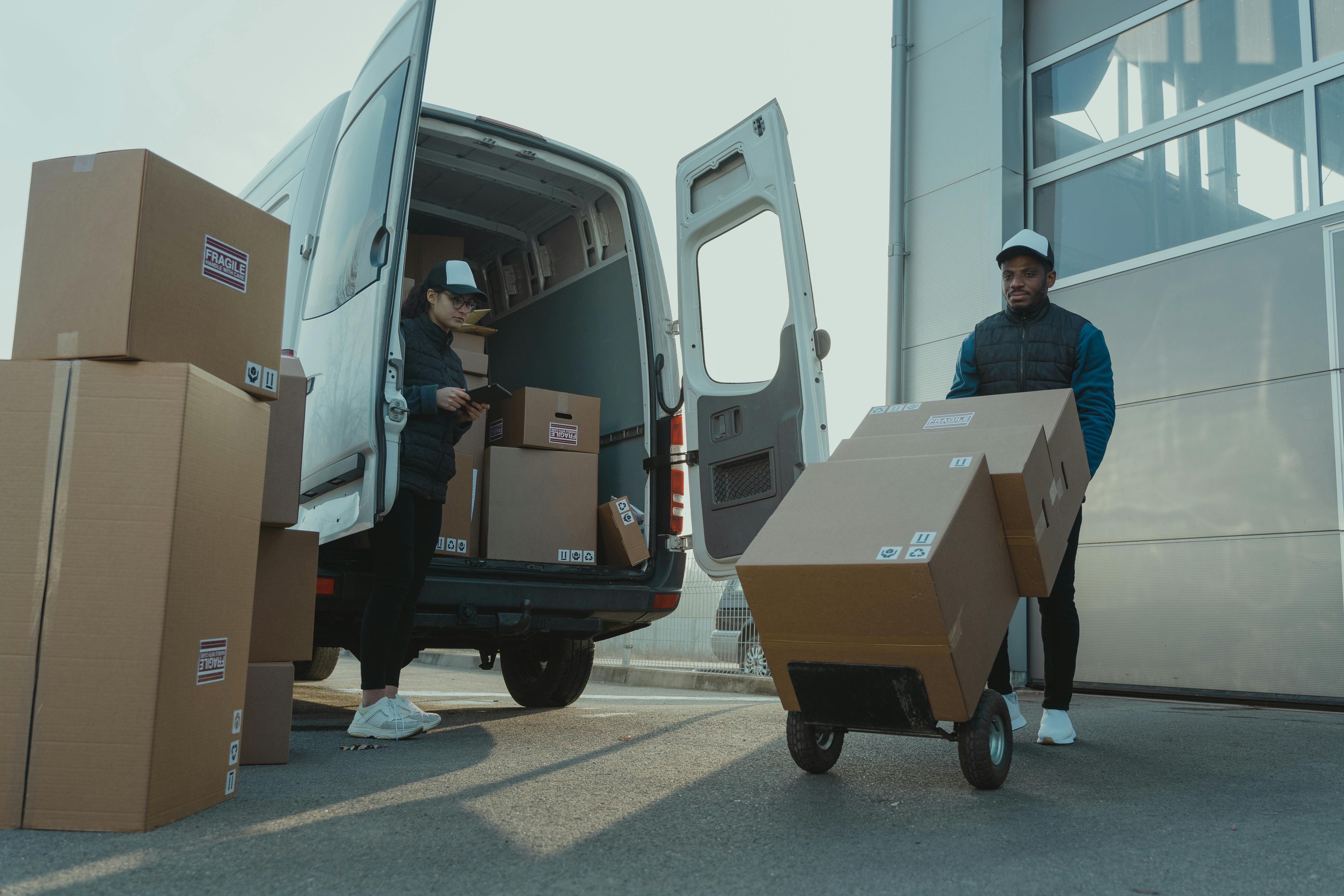
Photo by Kampus Production via Pexels
Why Customs Is Often a Bottleneck for Marketing Campaigns
International marketing campaigns have a unique problem: timing is everything. Where regular shipments might tolerate a week's delay without major impact, a marketing campaign can fail completely if materials arrive too late.
✗ What Goes Wrong Without Correct Documentation
- Held shipments: Customs holds your package until all documents are complete. This can take 7-21 days, depending on the country and complexity.
- Unexpected costs: Incorrect value declarations or missing COOs can lead to higher import duties than budgeted. Budgets spiral out of control.
- Fines and penalties: With incorrect documentation, customs authorities can impose fines up to hundreds of euros per shipment.
- Destruction of goods: In extreme cases (e.g., missing certificates for products with batteries), customs can seize or destroy goods.
- Reputation damage: Customers, retailers, or event organizers left without materials lose confidence in your reliability.
These problems are completely avoidable with proper preparation and expertise. At Service Bureau Jansen, we don't treat customs documentation as an afterthought, but as core to our process.
The 3 Most Common Customs Errors (and How to Prevent Them)
Error #1: Incorrect or Missing Certificate of Origin (COO)
A Certificate of Origin confirms where your product was manufactured. This document determines whether you qualify for free trade agreements and which tariffs apply.
- Forgetting to include COO (especially for non-EU shipments)
- Incorrect country of origin listed (e.g., "China" when final assembly was in Europe)
- Missing signature or stamp from Chamber of Commerce
- Outdated format no longer accepted
How SBJ prevents this: We automatically generate COOs based on product information you provide. For products with complex supply chains (e.g., assembly in multiple countries), we advise in advance on the correct origin designation.
Error #2: Incorrect HS Codes (Harmonized System Codes)
HS codes are standardized 6-10 digit codes used worldwide to classify products. The correct code determines which import duties, VAT rates, and any restrictions apply.
- Using too general a code (e.g., "printed matter" without specification)
- Using outdated codes no longer current
- "Guessing" a code without verification
- Product name on invoice too vague (e.g., "promotional items" instead of "polyester fabric banners")
How SBJ prevents this: We verify HS codes per product and per destination country. For complex products (such as tech with batteries or textiles with special coatings), we consult customs databases and work with local brokers who know the latest changes.
Error #3: Incomplete or Incorrect Commercial Invoices
The commercial invoice is the most important document in international shipping. It contains all information customs needs: what is being shipped, to whom, at what value, and why.
- Value incorrectly stated (too low to avoid import duties = fraud!)
- Missing recipient details (especially VAT numbers and EORI numbers for B2B)
- Vague product descriptions ("samples", "marketing materials" without details)
- Incorrect Incoterms used (DDP vs DAP makes a difference in who pays customs)
- No invoice number or date listed
How SBJ prevents this: We have standardized templates per country that automatically fill in all required fields. Customers provide us with product information and values; we ensure this is correctly stated on invoices according to local requirements.

Photo by Tiger Lily via Pexels
Basic Requirements per Region: EU vs Non-EU
The biggest dividing line in customs complexity runs between the EU and the rest of the world. Here's a practical rule of thumb:
Within the EU: Relatively Simple
Within the 27 EU member states (plus Norway, Iceland, Switzerland via free trade agreements) there is free movement of goods. This means:
- No customs declarations
- No import duties or tariffs
- No Certificate of Origin (unless specific products like agriculture)
- No complex HS codes (but VAT numbers for B2B)
Note: Post-Brexit, the United Kingdom is no longer an EU member. Shipments to/from the UK now require full customs documentation, including EORI numbers.
Outside the EU: Full Customs Procedure
For all non-EU destinations (US, Canada, China, India, Latin America, Middle East, etc.) you need at minimum:
| Document | Purpose | When Required? |
|---|---|---|
| Commercial Invoice | Value, description, sender/recipient | Always (even for "no value" samples) |
| Packing List | Detailed contents per package | From multiple packages or >€150 value |
| Certificate of Origin | Proves where product was made | Non-EU, especially Asia, Middle East |
| HS Codes | Classification for tariffs | Always (on commercial invoice) |
| EORI Number | EU registration number for customs | When shipping from/to EU |
Practical rule of thumb: Within EU = regular shipping like domestic. Outside EU = at least 3 extra documents and 2-5 days extra transit time for customs. Asia and Latin America = even more documentation and longer transit times.
Essential Documents Explained
Commercial Invoice vs. Proforma Invoice
Commercial invoice: This is the official invoice for a sale. It contains the actual value of the goods and is used by customs to calculate import duties.
Proforma invoice: This is an "estimated invoice" used when no sale has yet occurred. Think of samples you send to potential customers, or demo materials for trade shows. The value on this is indicative.
Note: Many companies think they don't need to state a value for samples. This is incorrect! Customs always wants to see a value, even for "samples without commercial value." In that case, state the production costs or replacement value.
Certificate of Origin (COO): When Needed?
A COO is especially important for:
- Free trade agreements: If you want to use reduced tariffs (e.g., EU-Korea free trade agreement)
- Anti-dumping rules: Certain countries levy additional tariffs on products from specific countries (e.g., Chinese steel products)
- Local regulations: Countries like India, China, and the Middle East almost always require a COO
How do you obtain a COO? In the Netherlands through the Chamber of Commerce. This can be done digitally and costs approximately €35 per certificate. We can handle this process for you as part of our fulfillment service.
HS Codes for Marketing Materials
Marketing materials often fall under general category 4911 (printed matter). But there are important subcategories:
- 4911.10: Trade advertising material (folders, catalogs)
- 4911.91: Pictures, designs and photographs (posters, displays)
- 9503: For promotional toys/gadgets
- 8517: For tech samples with communication functions
The correct subcategory can make a difference in tariffs. For example: educational materials often have lower tariffs than pure marketing materials.
Special Situations: Samples and Temporary Import
Samples "Without Commercial Value"
You're sending 50 product samples to potential retailers in the US to secure orders. You're not selling these samples – they're purely for promotion. Yet customs wants:
- A commercial invoice with value (use production costs + shipping)
- Clear marking: "Samples - Not for Resale" or "No Commercial Value"
- HS code of the actual product (not a general "sample" code)
- Often: a declaration that samples will be destroyed or returned after use
Temporary Import: ATA Carnet for Trade Shows & Events
If you're bringing marketing materials to a trade show and taking them back, you can often use an ATA Carnet (also called a "merchandise passport").

Photo by Nicolas Postiglioni via Pexels
What is an ATA Carnet?
An ATA Carnet is an international customs document that enables temporary import without payment of import duties and VAT. It's accepted in 80+ countries and is especially popular for:
- Trade show materials (booths, displays, demo products)
- Professional equipment (cameras, sound systems for events)
- Commercial samples returning home
✓ Benefits of ATA Carnet
- No import duties: You don't pay duties or VAT on entry (normally you would, but it gets refunded later – which can take 6-24 months!)
- Reusable: One carnet is valid for up to 1 year and multiple trips
- Faster customs: Customs are familiar with the system and process carnets with priority
- Less administration: One document for multiple countries
⚠ Note: An ATA Carnet must be requested at least 2 weeks before departure and costs approximately €235-€475 plus a deposit of 40% of the goods value. You must also prove that goods were re-exported within the validity period – otherwise you forfeit the deposit.
When not to use an ATA Carnet? If you're leaving products behind after the event (e.g., samples you give to retailers), or if you're only going to 1-2 countries for a short period. In those cases, regular temporary import may be cheaper.
How SBJ Takes Care of Customs
At Service Bureau Jansen, customs documentation isn't an afterthought – it's a core part of our fulfillment process. Here's how we work:
✓ Automatic Generation
Based on product data you provide, we automatically generate the correct commercial invoices, packing lists, and customs declarations per destination.
✓ Pre-Clearance
For complex markets like China, India, and Latin America, we work with local customs brokers who handle pre-clearance. This means documents are already approved before your shipment arrives.
✓ HS Code Verification
We check HS codes per product and per destination country. For new products, we research to find the most advantageous (but correct) classification.
✓ EORI & Registrations
In principle, the customer provides EORI numbers, but we're happy to help with the application process or advise on what's needed. Service comes first with us.
✓ Real-Time Tracking
Through our WICS system, you can see exactly where your shipment is in the customs process. You're proactively notified of any deviations.
✓ Proactive Communication
When customs issues arise, we immediately contact our brokers, determine the reason, and resolve it. You don't have to call Chinese customs yourself to figure out why your shipment is stuck.
Result: In 90% of cases, we prevent customs issues through correct documentation and pre-clearance. The remaining 10% we resolve on average within 48 hours through our local networks.
Post-Brexit UK: Special Attention
Since January 1, 2021, the United Kingdom is no longer an EU member. This has a major impact on shipments:
What Has Changed?
- Full customs procedure: UK is treated as a non-EU country, so all documents are required
- EORI number mandatory: Both sender and recipient need an EORI (UK EORI starts with "GB")
- VAT changes: From €150, import duties are due. Below that can go via IOSS system
- Longer transit time: Allow +2-4 days extra for customs clearance
How SBJ handles UK shipments: We have established partners in the UK who handle customs locally. For regular UK shipments, we often recommend maintaining a small stock in a UK fulfillment center – this avoids repeated customs procedures.
Let Us Handle Your Customs Documentation
No more hassle with missing COOs, incorrect HS codes, or stuck shipments. We take the entire customs process off your hands.
Get in Touch← Back to International Marketing Distribution
Frequently Asked Questions About Customs Documents
No, this is a common mistake. Customs always wants to see a value, even for samples. State the production costs or replacement value, and clearly mark "Sample - Not for Resale." Stating no value can lead to delays or even fines.
You can look up HS codes via the EU's TARIC database (for EU shipments) or via national customs websites. However, for complex products, we always recommend having this verified by an expert. Incorrect codes can lead to higher tariffs or delays. SBJ does this verification automatically for all our shipments.
For businesses that regularly ship internationally, an EORI number is mandatory for import/export from/to the EU. You can apply for this free of charge via your country's customs website. It usually takes 3-5 business days. SBJ can help you with the application process or advise which numbers you need for specific destinations.
Not always. An ATA Carnet is ideal for large, valuable shipments to multiple countries, or when you regularly attend international trade shows. For one-time, smaller shipments, regular temporary import may be cheaper. Also, if you leave products behind after the event (samples to customers), a carnet doesn't work. We advise per situation what's most advantageous.
Customs documentation is part of our fulfillment service and is not separately invoiced for regular shipments. For complex situations (e.g., first shipment to a new country with specific certifications), there may be costs for customs broker fees – we always communicate these in advance. The benefit: you save time, prevent delays, and avoid costly mistakes.
Through the Dutch Chamber of Commerce, you can apply for a COO digitally. This usually takes 1-2 business days. For urgent situations, same-day is possible at an additional cost. SBJ can handle this process for you as part of our documentation service, so you can focus on your campaign.