

Shipping to Europe from the United States: What US Companies Need to Know
The EU is a market of 450 million consumers – but European regulations are very different from US rules. We handle EU distribution daily and know exactly what it takes to succeed.
The European Union represents a massive opportunity for American companies: nearly half a billion consumers with strong purchasing power, spread across 27 countries that share a single market. But here's what most US businesses discover too late: European regulations are fundamentally different from what you're used to.
There's no FDA equivalent – instead you're dealing with CE marking, REACH compliance, and country-specific rules. There's no simple sales tax – you're navigating VAT across multiple jurisdictions. And shipping promotional merchandise, new hire kits, or company swag to your European employees or clients? That's considered a commercial import with all the paperwork that entails.
At Service Bureau Jansen, we've been helping companies distribute marketing materials and promotional products across Europe since 1953. We're based in Eindhoven, Netherlands – one of Europe's key logistics hubs – and we handle fulfillment for enterprises ranging from mid-market promotional companies to Fortune 500 corporations. This article explains exactly what US companies face when shipping to Europe, and how to solve each challenge.
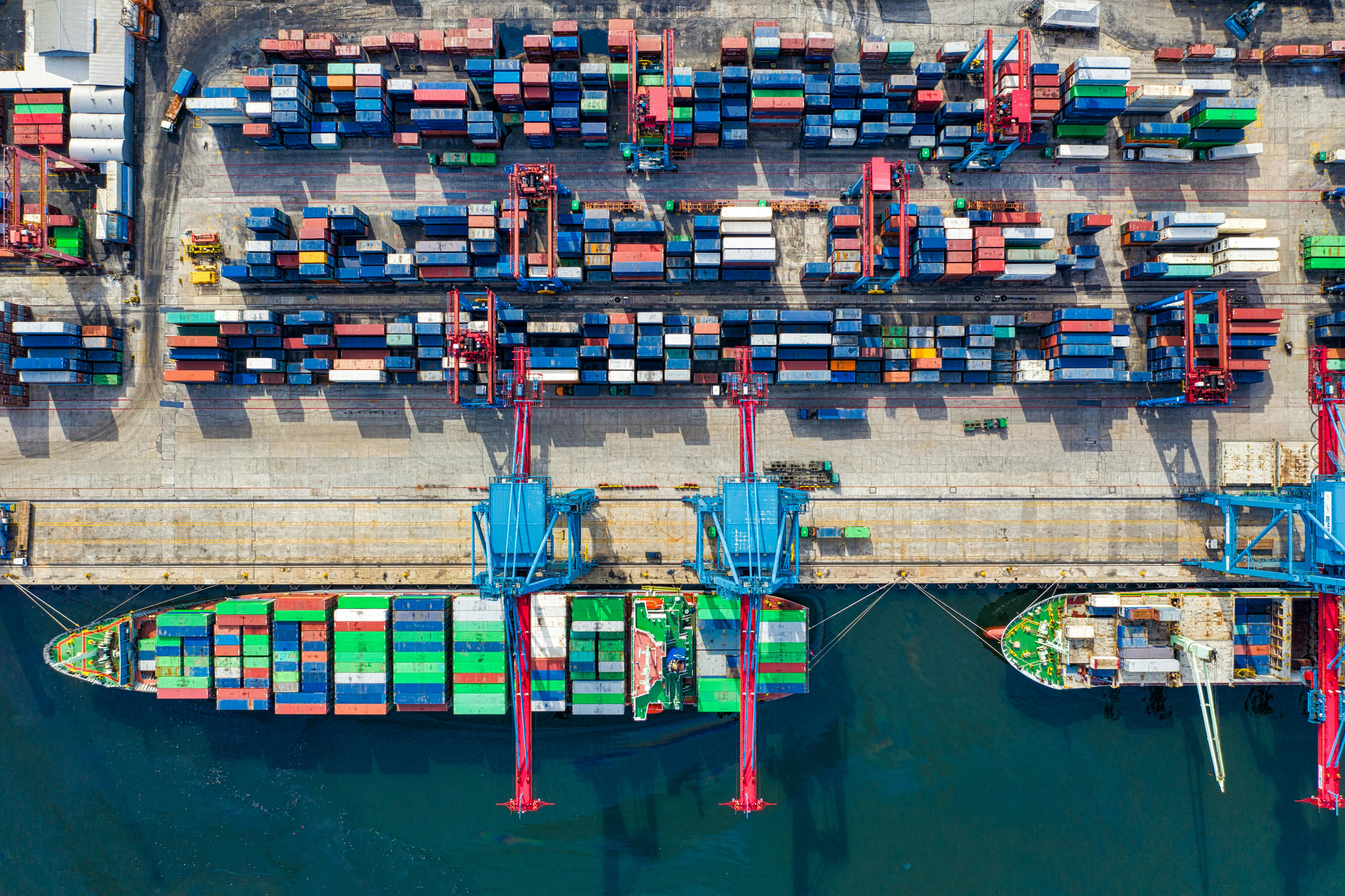
Photo by Nextvoyage via Pexels
Why Shipping to Europe Is Different from Domestic US Shipping
If you're used to shipping across the United States, European logistics will feel like a completely different world. The EU has harmonized many rules across its member states, but the complexity comes from the sheer number of regulations you'll encounter.
⚠ Key Challenges US Companies Face
- VAT on everything: Unlike US sales tax, Value Added Tax applies to all imports regardless of value. The €22 exemption was abolished in 2021 – even a $20 t-shirt now triggers VAT obligations.
- No de minimis threshold: While the US allows $800 duty-free imports per person, the EU has no equivalent. Every commercial shipment requires customs declaration and potential duty payment.
- EORI number requirement: You need an Economic Operator Registration and Identification number to import into the EU. Without it, your shipment sits at customs.
- Importer of Record rules: As a non-EU company, you cannot simply clear goods yourself. You need an EU-based entity to act as the Importer of Record.
- CE marking for many products: Electronics, toys, machinery, and many other products require CE certification before entering the EU market.
- 27 countries, different languages: While customs are unified, last-mile delivery and recipient expectations vary by country.
The good news? Once you understand the system and have the right partner in place, shipping to Europe becomes predictable and efficient. Many US companies successfully run European fulfillment operations – you just need to set it up correctly from the start.
VAT: The Biggest Difference from US Sales Tax
Value Added Tax is where most American companies get their first surprise. Unlike US sales tax (which is collected at the point of sale within each state), VAT is collected at the border on imports and varies by country.
Understanding EU VAT Basics
VAT rates vary across EU member states, typically ranging from 17% to 27% depending on the country and product category. When you ship goods to Europe, VAT is calculated on the total value including shipping costs.
Key difference from US sales tax: VAT is charged at each stage of the supply chain, but ultimately the end consumer bears the cost. For B2B transactions, your business customers can typically reclaim the VAT – but the paperwork needs to be correct.
The IOSS system: For shipments valued under €150, the Import One-Stop Shop (IOSS) allows you to collect VAT at checkout and remit it through a single EU registration. This speeds up customs clearance and prevents surprise charges for your customers.
For shipments over €150: Standard import procedures apply. VAT is collected at the border, and you'll need proper customs documentation.
VAT Rates by Major EU Market
| Country | Standard VAT Rate | Reduced Rates |
|---|---|---|
| Germany | 19% | 7% (food, books) |
| France | 20% | 5.5% (food, books) |
| Netherlands | 21% | 9% (food, medicine) |
| Italy | 22% | 4-10% (essentials) |
| Spain | 21% | 4-10% (food, medicine) |
| Poland | 23% | 5-8% (food, medicine) |
| Sweden | 25% | 6-12% (food, culture) |
| Hungary | 27% | 5-18% (essentials) |
Critical for promotional products: Even if you're shipping free merchandise (swag, promotional items, new hire kits), VAT is calculated on the production value of the goods. "Free" doesn't mean tax-free at EU customs.
EORI and Importer of Record: Who Can Actually Import Your Goods?
This is where US companies often hit their first real roadblock. You can't simply ship goods to Europe under your own company name and clear them through customs. You need specific registrations and, in most cases, an EU-based partner.
What Is an EORI Number?
An EORI (Economic Operator Registration and Identification) number is the EU's system for identifying businesses involved in import/export. Think of it like an EIN for customs purposes.
Key points for US companies:
- Non-EU businesses can obtain an EORI number from the EU country where they first make a customs declaration
- One EORI number is valid across all 27 EU member states
- Without an EORI, your shipments cannot be cleared through EU customs
- The EORI number must appear on all customs documentation
Processing time: EORI registration typically takes a few business days once you have all documentation ready, but can take longer if there are issues with your application.
The Importer of Record Challenge
Here's where it gets complicated for non-EU companies. The Importer of Record (IOR) is the entity legally responsible for ensuring goods comply with EU laws, paying duties and taxes, and maintaining documentation.
The problem: To act as IOR in the EU, you generally need to be established in the EU with a VAT registration. As a US company, you typically cannot act as your own Importer of Record.
Your options:
- Your EU customer acts as IOR: Works for B2B shipments where your buyer has an EORI and VAT number. They handle import formalities and reclaim VAT.
- Use a third-party IOR service: Companies specialize in acting as Importer of Record for non-EU businesses. They take on the legal responsibility for your imports.
- Partner with an EU fulfillment provider: Ship in bulk to a European warehouse, where the fulfillment partner handles import. Then distribute within the EU without further customs complications.
Important note: Major carriers like FedEx and UPS can facilitate customs clearance, but the IOR question still needs to be resolved. Amazon FBA warehouses will not act as Importer of Record for your shipments.

Photo by Kampus Production via Pexels
CE Marking: Product Compliance for the EU Market
If you're shipping products (not just marketing materials), CE marking is likely on your radar. This is the EU's certification mark indicating that a product meets European health, safety, and environmental standards.
⚠ CE Marking Is Not Optional
CE marking is legally required for many product categories before they can be sold or distributed in the EU. This includes electronics, toys, machinery, medical devices, personal protective equipment, and many more categories.
Key points for US exporters:
- CE marking is the manufacturer's declaration that the product meets EU requirements
- For many products, you can self-certify by testing against harmonized EU standards
- Higher-risk products (medical devices, certain machinery) require third-party certification by a "Notified Body"
- Technical documentation must be maintained and available for EU authorities upon request
- Non-EU manufacturers must appoint an EU-based Authorized Representative for many product categories
Products Requiring CE Marking
CE marking applies to a wide range of product categories under various EU directives:
- Electrical equipment: Low Voltage Directive, EMC Directive
- Electronics: Radio Equipment Directive, RoHS Directive
- Toys: Toy Safety Directive
- Machinery: Machinery Directive
- Personal protective equipment: PPE Regulation
- Medical devices: Medical Devices Regulation
- Construction products: Construction Products Regulation
Good news for promotional products: Most branded apparel, printed materials, drinkware, and typical promotional items do not require CE marking. But if you're shipping electronic gadgets, power banks, or tech accessories as promotional items, CE compliance applies.
The Netherlands: Your Gateway to Europe
There's a reason over 1,000 American and Asian companies have centralized their European distribution in the Netherlands. The country offers unique advantages for non-EU businesses entering the European market.
Strategic Location
Rotterdam is Europe's largest port and a major air cargo hub through Amsterdam Schiphol. From the Netherlands, you can reach 160 million consumers within 24 hours by truck – that's Germany, Belgium, France, and the UK.
VAT Deferment Scheme
The Netherlands offers a unique VAT postponed accounting scheme. Instead of paying VAT at import, you can defer it to your periodic tax return. For B2B sales, this means no actual VAT outlay – a significant cash flow advantage.
English-Speaking Workforce
The Netherlands has one of the highest English proficiency rates in Europe. Communication with your fulfillment partner happens without language barriers.
Established Logistics Infrastructure
World-class warehousing, experienced customs brokers, and efficient last-mile delivery networks make the Netherlands the preferred EU entry point for international businesses.
Why this matters for your business: By shipping in bulk to a Dutch warehouse, you clear customs once and can then distribute throughout the EU without additional import procedures. Products move freely within the single market once they're in.
Common Product Categories: What US Companies Ship to Europe
Based on our experience handling transatlantic fulfillment, these are the most common product categories US companies need to distribute in Europe:
🎁 New Hire Kits
Welcome packages for European employees of US companies. Typically includes branded apparel, office supplies, tech accessories, and company swag. Customs values these at production cost, not retail.
📦 Promotional Materials
Marketing collateral, trade show materials, product samples, and branded merchandise for European events. Timing is critical – materials need to clear customs before your event date.
🛍️ Online Pop-Up Stores
Temporary company stores for employee appreciation, events, or product launches. We store inventory and fulfill orders directly to recipients across Europe.
👔 Corporate Apparel
Branded clothing for European teams, from t-shirts to workwear. Textile labeling requirements apply – care instructions and fiber composition must be in local languages.
🏆 Premiums & Incentives
Reward programs, customer gifts, and incentive fulfillment. Higher-value items may require additional documentation for customs valuation.
📚 Training Materials
Printed manuals, educational kits, and onboarding materials for European offices or partners. No CE marking required for printed materials.
How Service Bureau Jansen Solves These Challenges
We've been in the fulfillment business since 1953, and we've spent decades helping international companies navigate European logistics. Here's how we address each challenge US companies face:
✓ Single Bulk Import
Ship your products once to our warehouse in Eindhoven. We handle customs clearance upon arrival. Once goods are in free circulation, we distribute throughout Europe without additional import procedures.
✓ EORI & IOR Assistance
We guide you through EORI registration and can connect you with trusted partners for Importer of Record services. You don't need to figure out EU bureaucracy alone.
✓ VAT Compliance
Through Dutch fiscal representation arrangements, we help you benefit from VAT deferment. We ensure all documentation is correct for smooth customs clearance.
✓ Pan-European Distribution
From our central location, we ship to all 27 EU countries plus Switzerland, Norway, and the UK. Delivery times of 1-4 days for most European destinations.
✓ Flexible Fulfillment
Whether you're shipping 50 packages or 50,000, we scale to your needs. Growing companies get the same attention as enterprise clients – we believe in building long-term partnerships.
✓ Company Store Solutions
Need a branded webshop for your European employees or clients? We can help you set up or connect with the right platforms, with inventory stored and orders fulfilled from our facility.
The Process: From US Warehouse to European Recipients
Here's how a typical engagement works when you partner with Service Bureau Jansen for European distribution:
Step 1: Initial Setup (2-4 weeks)
We start with a consultation to understand your products, volumes, and distribution needs. We advise on:
- EORI registration requirements
- Importer of Record arrangements
- Product compliance (CE marking, labeling)
- Optimal shipping methods and frequencies
During this phase, we set up your account, establish customs documentation templates, and prepare our warehouse for your products.
Step 2: Bulk Shipment to Netherlands
You ship products in bulk from your US facility to our Eindhoven warehouse. We recommend:
- Sea freight for non-urgent, high-volume shipments (6-8 weeks transit, most economical)
- Air freight for time-sensitive materials (3-5 days transit)
- Proper palletization and documentation to streamline customs clearance
Upon arrival at Rotterdam port or Amsterdam airport, we coordinate customs clearance. Products are transported to our facility and checked into inventory.
Step 3: Storage & Inventory Management
Your products are stored securely in our warehouse with:
- Real-time inventory tracking
- Climate-controlled areas if needed
- Quality checks on incoming shipments
- Low-stock alerts and reorder recommendations
Step 4: Order Fulfillment
When orders come in, we pick, pack, and ship:
- Single items or custom kits assembled per your specifications
- Branded packaging options available
- Multiple carrier options for cost/speed optimization
- Tracking information provided for every shipment
Step 5: Ongoing Support
Our team handles:
- Returns processing
- Customer service inquiries (in multiple European languages)
- Inventory reporting
- Continuous optimization of your fulfillment process
Common Mistakes US Companies Make (And How to Avoid Them)
🚫 Top 7 Mistakes in EU Export
1. Undervaluing shipments on customs declarations
EU customs authorities are experienced at spotting undervalued shipments. If your declared value seems suspiciously low, expect inspections, delays, and potential fines. Always declare realistic commercial value.
2. Assuming "free goods" means no customs value
Promotional items, samples, and gifts still have customs value based on production cost. VAT and duties apply. Marking packages as "gift" or "no commercial value" for commercial shipments is illegal.
3. Forgetting about Importer of Record requirements
Shipments arrive at EU customs with no valid IOR, and packages sit in customs warehouses accruing storage fees. Resolve IOR arrangements before your first shipment.
4. Incorrect or missing HS codes
Harmonized System codes determine duty rates. Wrong classification leads to incorrect duties, potential fines, and customs delays. Work with your customs broker to verify codes.
5. Missing labeling requirements
Textiles need care instructions and fiber composition. Electronics need CE marking. Many products need EU-compliant labeling in local languages. Check requirements before shipping.
6. Shipping directly to end recipients for every order
Individual international shipments are expensive and customs-complicated. For regular European distribution, bulk shipping to a European warehouse is far more economical and efficient.
7. Not planning for returns
European consumers have strong return rights. You need a local return address and process. Returns shipped back to the US are expensive and complicated.
Delivery Times & Shipping Options
Once your products are in our European warehouse, delivery across the EU is fast and cost-effective:
Express (1-2 days)
Coverage: Netherlands, Belgium, Germany, France
Best for: Urgent deliveries, time-sensitive materials
Carriers: DHL Express, UPS Express, FedEx
Standard (2-4 days)
Coverage: All EU countries
Best for: Regular fulfillment, balanced cost/speed
Carriers: DHL, PostNL, local carriers
Economy (4-7 days)
Coverage: All EU countries
Best for: Non-urgent, cost-sensitive shipments
Carriers: Postal services, economy carriers
Pallet/B2B (varies)
Coverage: All EU countries
Best for: Large quantities to single locations
Carriers: Freight carriers, groupage services
Compared to shipping from the US: International express from the US to Europe typically takes 3-5 days and costs $50-150+ per package. Shipping from our Dutch warehouse takes 1-4 days at a fraction of the cost. The economics favor European fulfillment for any regular volume.
Working with US Fulfillment Partners
Many US promotional fulfillment companies recognize the need for European distribution but don't have local operations. We partner with American companies and other promotional distributors to extend their reach into Europe.
How Partnership Works
If you're a US fulfillment company serving clients with European needs:
- White-label fulfillment: We operate as your European arm, invisible to your end clients
- Integrated systems: We can connect with your order management platforms
- Consistent service levels: Your clients get the same quality across continents
- Single point of contact: One relationship to manage European logistics
This allows you to offer European fulfillment without building your own overseas operation.
Ready to Expand Your European Distribution?
Let's discuss your specific situation. We'll evaluate your products, volumes, and requirements – then design a fulfillment solution that makes European distribution simple and cost-effective.
Get in Touch← Back to International Marketing Distribution Read more about Customs Documents Read about Shipping to the USA
Frequently Asked Questions About Shipping to Europe
Typically about a month from initial contact to first shipment arriving at our warehouse. This includes account setup, EORI guidance, establishing customs documentation templates, and coordinating your first bulk shipment. For companies with existing EORI and clear product requirements, it can be faster. Complex situations with multiple product categories or compliance questions may take a few weeks longer.
If you want to be involved in EU customs procedures directly, yes. Non-EU companies can obtain an EORI number from the EU country where they first make a customs declaration. However, many US companies use a third-party Importer of Record service or rely on their EU fulfillment partner's arrangements. We can advise on the best approach for your situation.
Individual international shipments from the US typically cost $50-150+ per package via express carriers, with 3-5 day delivery times and customs complications at each destination. Shipping in bulk to Europe reduces per-item shipping costs significantly, and fulfillment from within the EU costs €5-20 per package depending on size and destination. The crossover point where European warehousing becomes economical is usually around 30-50 shipments per month to Europe.
No. This is a common misconception that can lead to serious customs issues. Even if items are given away for free, they have customs value based on production cost. Declaring items as having no commercial value when they're part of business activities is considered fraudulent misrepresentation. Always declare realistic values – promotional items, samples, and gifts are all valued at their production or acquisition cost.
It depends on the product category. Electronics, toys, machinery, personal protective equipment, and many other categories require CE marking. However, most typical promotional items – branded apparel, drinkware, printed materials, bags, stationery – do not require CE marking. If you're shipping tech accessories like power banks or electronic gadgets as promotional items, CE compliance will apply. We can help you assess your specific products.
Customs holds typically result from documentation issues – missing or incorrect information, Importer of Record problems, or compliance concerns. When goods are held, storage fees accumulate daily. Our established relationships with customs brokers help resolve issues quickly. The best approach is prevention: correct documentation, proper valuation, and verified IOR arrangements before shipping. When issues do occur, we work to resolve them typically within 2-5 business days.
Yes. Returns come back to our Dutch facility where we inspect items, update inventory, and prepare suitable goods for redistribution. This is much more practical than returning items to the US, which would involve customs procedures and shipping costs that typically exceed the value of the returned items. We can establish return processing workflows that match your policies.
The UK is now a separate customs territory from the EU. Shipments from our Dutch warehouse to the UK require customs declaration and may incur UK VAT and duties. We handle UK fulfillment as a separate process from EU distribution. For significant UK volumes, some companies choose to hold separate inventory in the UK. We can advise on the most efficient approach based on your UK order volumes.